Choosing where to store your gold is as important as deciding to buy it in the first place. The right storage solution balances security, accessibility, cost, and legal compliance—while the wrong choice can expose you to theft, loss, excessive costs, or tax consequences. This guide analyzes all major storage options with 10-year cost comparisons, security assessments, and strategic recommendations based on holding size.
The bottom line: Professional vault storage delivers optimal value for most investors, costing dramatically less than properly secured home storage while providing superior security, full insurance, and liquidity. A $250,000 gold position stored professionally costs approximately $13,750 over 10 years versus $41,360 for equivalent home security—a $27,610 savings—while eliminating theft risk and maintaining instant access.
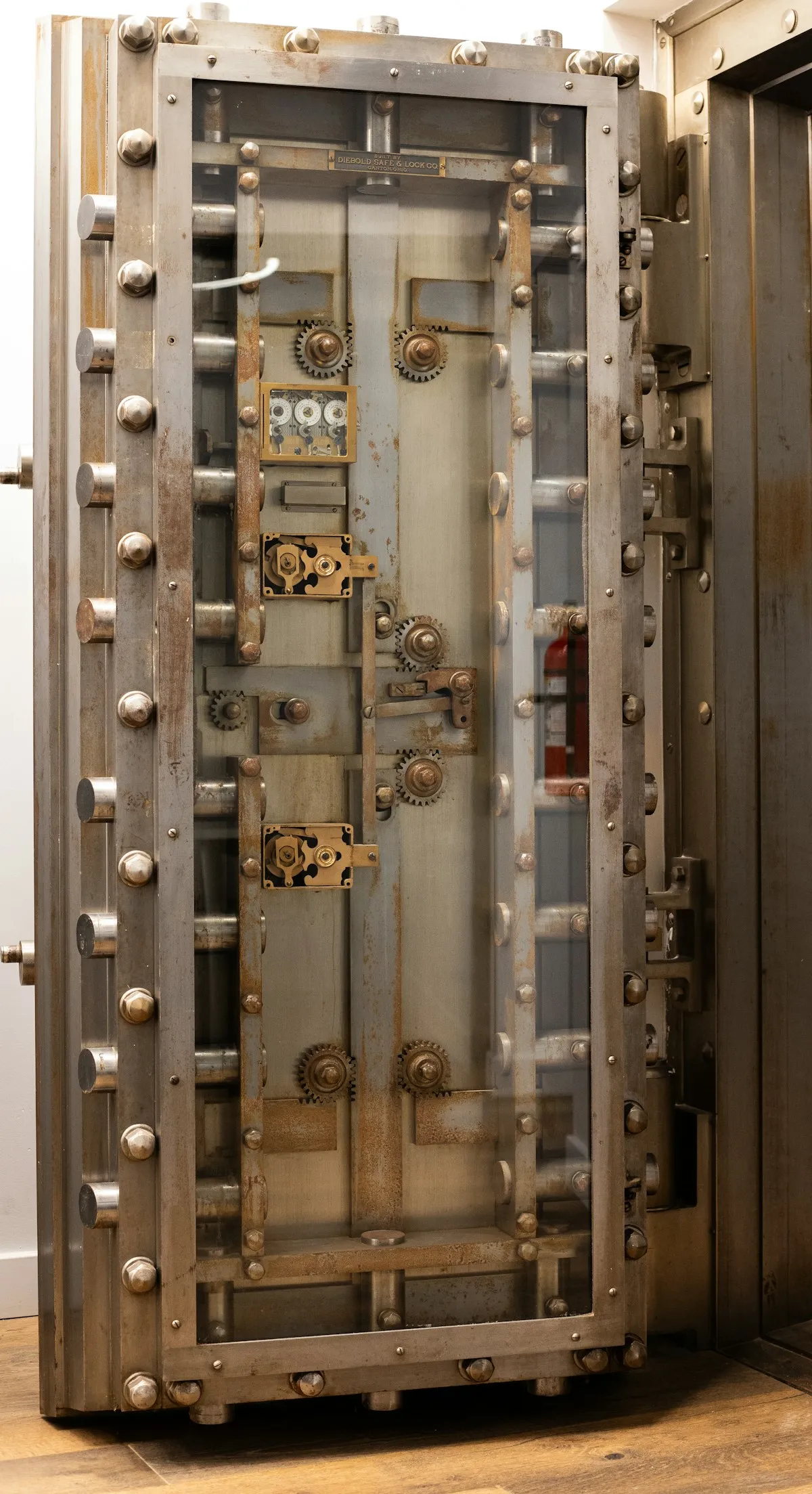
Home Storage: Costs, Security, and Legal Considerations
Home storage appeals to investors who want immediate physical access and complete control. However, proper home storage requires substantial investment in security infrastructure that most investors underestimate.
Safe Specifications and Requirements
Minimum safe standards for gold storage:
- Weight: 1,000-3,500 lbs minimum (prevents removal by 2-3 people)
- Rating: TL-15 minimum (resists tools for 15 minutes), TL-30 preferred (30 minutes), TL-30X6 ideal (all six sides protected for 30 minutes)
- Fire protection: UL Class 350-1 Hour or 350-2 Hour rating (keeps interior below 350°F for specified duration)
- Anchoring: Concrete floor bolting required for safes under 2,000 lbs
Leading manufacturers and pricing:
- AMSEC: CF Series TL-15 safes range from $5,130 (CF3524) to $12,165 (CF6528). The CF5524 ($8,647) provides 8.1 cubic feet and holds approximately $500K-$750K in gold.
- Liberty Safe: FATBOY series offers excellent fire protection, $3,209-$3,829 for premium models with 2.5-hour fire ratings.
- Fort Knox: Premium construction with lifetime warranties, $3,000-$15,000+ depending on size. The Executive model ($8,500) provides superior protection.
Lock mechanisms:
- Mechanical (S&G Group II): No batteries, decades-long lifespan, slower access. Recommended for long-term storage.
- Electronic: Faster access, multiple user codes, audit trails. Requires battery replacement every 2-3 years.
- Biometric: Fastest access but potential reliability issues. Not recommended as sole locking mechanism.
Security System Integration
A safe alone provides insufficient protection—burglars with 30+ minutes can defeat most residential safes. Professional monitoring is essential.
Monitored alarm systems:
- ADT: $30-$80/month for professional monitoring, intrusion detection, 24/7 response
- Vivint: $30-$50/month, includes smart home integration
- SimpliSafe: $32.99-$79.99/month, cellular backup prevents line cutting
Coverage improvements from monitoring: Insurance companies typically increase precious metals coverage limits significantly when professionally monitored alarms are installed—sometimes from $250 to $25,000+.
Insurance: The Hidden Cost
Standard homeowner’s policy limitations: Most policies limit precious metals to $200-$250 total—essentially worthless for gold investors. A $100,000 gold position is 99.75% uninsured under standard coverage.
Scheduled Personal Property Riders:
- Cost: 1-2% of insured value annually
- Example: $100-$200 per year for $10,000 coverage
- $100,000 position: $1,000-$2,000 annually
- Requires itemization, appraisals, and often photographic documentation
Specialized precious metals insurance:
- Hugh Wood Inc.: Industry specialist, 1-2% annual premiums
- Chubb: Requires $25,000+ minimum, offers 150% market value coverage (protects against price appreciation)
- Jewelers Mutual: No deductible, up to $150,000 per item, competitive pricing
Critical exclusions: “Mysterious disappearance” often excluded—you must prove forced entry or documented loss. Simply discovering gold missing may not be covered.
Theft Risk Statistics
Sobering reality:
- 839,563 burglaries reported in 2023 (FBI UCR data)
- 50%+ are residential break-ins
- 93% of stolen items are never recovered
- 75% of burglars search master bedroom first
- Average burglary duration: 8-12 minutes
Gold’s unique vulnerability: $250,000 in gold weighs approximately 3.5 lbs—fits in a pocket. Unlike televisions or jewelry, gold leaves no identifiable marks or serial numbers, making recovery nearly impossible.
⚠ Warning
Standard homeowner’s policies limit precious metals coverage to $200-$250 total. A $100,000 gold position is 99.75% uninsured under standard coverage. Scheduled riders or specialty insurers are essential for any meaningful home-stored holdings.
Legal and Tax Considerations
IRS reporting: No federal requirement to report gold ownership or home storage. Unlike firearms, there’s no registration database.
Gold IRA prohibition: IRC Section 408(m) explicitly prohibits storing IRA-owned gold at home. The McNulty case (2021) confirmed that home storage of IRA metals creates an immediate taxable distribution—equal to the value of the metals taken into personal possession—plus a 10% early-withdrawal penalty if under 59½. Total cost: ordinary income tax on that value + the 10% penalty + potential accuracy-related penalties.
★ Important
Despite marketing claims from some companies, home storage of IRA-owned gold is illegal. The McNulty case confirmed that “home storage Gold IRAs” trigger an immediate taxable distribution of the metals’ value, plus a 10% early-withdrawal penalty if under 59½—and, as a prohibited transaction, can disqualify the entire account.
Safe Deposit Boxes: Convenience vs. Protection Gaps
Bank safe deposit boxes offer low-cost storage with institutional security, but contain critical limitations that many investors don’t understand.
Costs and Capacity
Typical annual rental costs:
- Small (3”×5”×22”): $42-$75/year (holds 15-25 oz gold coins, $40K-$67K value)
- Medium (5”×5”×22”): $75-$125/year (holds 40-60 oz, $107K-$160K value)
- Large (10”×10”×22”): $150-$250/year (holds 150-200 oz, $400K-$535K value)
- Extra-large (15”×22”+): $300-$500+/year
Critical Insurance Gaps
Safe deposit box contents are NOT FDIC insured.
This bears repeating because it’s widely misunderstood. FDIC insurance covers deposits (checking, savings, CDs)—not box contents. Banks explicitly disclaim liability beyond minimal amounts.
Bank liability limitations:
- Chase: $25,000 maximum
- Citigroup: 500× annual box rent (typically $50,000-$100,000)
- Wells Fargo: Similar caps around $25,000
What this means: A $200,000 gold position in a safe deposit box is 87.5% uninsured if the bank’s limit is $25,000. Bank failures, natural disasters, or employee theft could result in catastrophic uncompensated loss.
Access Restrictions
Banking hours only: Most banks operate 9 AM-5 PM weekdays, limited Saturday hours. Emergency weekend access is impossible. During 2008-2009 financial crisis, some banks limited access frequency.
Bank failures: 516 banks failed between 2009-2023. When banks fail, the FDIC or acquiring institution takes control—safe deposit box access can be suspended for weeks or months during transition.
The 1933 Confiscation Myth
Executive Order 6102 did NOT involve mass seizure of safe deposit boxes.
This persistent myth claims that in 1933, the government searched and confiscated gold from safe deposit boxes. Historical fact: The order required voluntary surrender of gold at $20.67/oz with exemptions for:
- Coin collections
- Gold held for industry/arts
- Up to $100 in gold coins per person
Reality:
- No mass searches occurred
- Safe deposit boxes were not forcibly opened
- Only one person was prosecuted (Frederick Barber Campbell)—and the conviction was overturned on appeal
- The frequently-cited “March 9, 1933 bank holiday search order” is a hoax document
When Safe Deposit Boxes Make Sense
Optimal use cases:
- Temporary storage during portfolio rebalancing
- Smaller positions ($10K-$50K) as part of diversified storage
- Keeping original paperwork and documentation (receipts, appraisals)
- Secondary location for portion of holdings
Requirements for safe deposit box storage:
- Add specialized insurance rider (1-2% annually on value)
- Document contents with photographs and itemization
- Inform executor/trustee of location and provide access authorization
- Keep duplicate key in secure location with trusted person
$250,000 in gold weighs approximately 3.5 pounds and fits in a coat pocket. Unlike televisions or jewelry, gold leaves no identifiable marks or serial numbers, making recovery after theft nearly impossible. This unique vulnerability demands professional-grade security.
Professional Domestic Vault Storage
Professional vault storage provides institutional-grade security, full insurance, and liquidity at costs far below proper home storage for most position sizes.
Delaware Depository Service Company (DDSC)
Overview: The most widely-used Gold IRA depository in the United States, with impeccable reputation and institutional infrastructure.
Locations:
- Wilmington, Delaware
- Boulder City, Nevada
- Zurich, Switzerland
- Toronto, Canada
Security:
- Class 3 UL-rated vaults
- SSAE-18 SOC-1 Type II audited (independent verification of controls)
- $1 billion Lloyd’s of London insurance coverage
- 24/7/365 armed security
- Biometric access controls
- Redundant power and environmental systems
Fees:
- Setup: $50-$100
- Annual administration: $125-$220
- Storage: 0.50-1.5% of value ($95-$220 minimum)
- Total first-year cost (on $100K): approximately $500-$800
Track record: Unblemished security record since founding in 1999. No losses, no breaches, no customer complaints related to security.
International Depository Services (IDS)
Facilities: Three Class III depositories: Delaware, Dallas, Mississauga (Canada)
Unique features:
- Segregated storage only (no commingled option)—every customer gets dedicated space at no additional cost
- Texas locations exempt from sales tax on precious metals
- No state income tax in Texas (advantageous for IRA distributions)
Fee structure (tiered):
- 0.65% annually on first $250K
- 0.55% on $250K-$500K
- 0.45% on $500K-$1M
- 0.35% on $1M-$2.5M
- 0.30% on $2.5M-$5M
Minimum fees: $100-$150 annually depending on plan
Brink’s Global Services
Pedigree: 150+ years in secure logistics. Name recognition and institutional credibility.
Locations: New York, Los Angeles, Salt Lake City, Dallas
Access via APMEX Citadel program:
- 0.55% annual fee
- $15/month minimum ($180/year)
- Fully allocated and segregated
- Complete Lloyd’s of London insurance
- 3-5 business days notice for in-person visit
Advantages:
- Integration with APMEX purchases (free shipping on orders $500+)
- Established track record with recognizable brand
- Institutional-grade infrastructure
CNT Depository
Size: 63,000 sq ft facility in Bridgewater, Massachusetts—largest privately-owned precious metals depository in the U.S.
Storage model: 100% segregated/allocated only—no commingling option available. Every customer’s metals stored separately with dedicated labeled containers.
Government relationship: Largest seller of raw gold to the federal government, with $8+ billion in annual revenue from government contracts. Provides additional credibility and financial stability.
Fees: Typically 0.5-1.0% annually with minimums around $100-$150

Allocated vs. Unallocated Storage: A Critical Distinction
Understanding this difference is essential—it determines whether you own physical metal or merely hold a claim.
Allocated Storage
Definition: Specific bars or coins are assigned to you by serial number or mark. You own the physical metal directly; it’s off the depository’s balance sheet.
Legal structure: Bailment law (centuries of legal precedent). You retain ownership; the depository is simply a custodian. If the depository goes bankrupt, creditors cannot claim your bailed assets—you can retrieve them.
Verification: You can request audit reports listing your specific bar/coin serial numbers. Some depositories allow customer visits to view holdings.
Types:
- Segregated allocated: Completely separate dedicated space with sealed, labeled containers. Your gold never mingles with others’.
- Non-segregated allocated: Specific quantities assigned to you by serial number, but stored alongside other customers’ identical items (e.g., your 100 oz American Eagles stored with other customers’ American Eagles in same vault area).
Both types provide identical legal ownership protections—segregation is primarily about operational convenience and customer preference.
Unallocated Storage
Definition: You own a claim on pooled gold. No specific bars assigned. The institution uses the gold for operational purposes (lending, leasing, hedging).
Legal structure: You’re a general creditor with claim on fractional amount of pool. If institution becomes insolvent, you compete with other creditors for assets—disputes about amounts owed are common.
Cost advantage: Typically 0.10-0.30% lower fees than allocated
Why unallocated exists: Banks and some dealers use unallocated storage for operational efficiency—they can lend gold to earn additional revenue, reducing storage costs for customers.
Why it’s dangerous: MF Global bankruptcy (2011) demonstrated the risk. The commodity broker held customer gold in pooled accounts. When the firm collapsed, customer claims were disputed, recoveries were partial, and resolution took years.
Expert Consensus
Nearly all precious metals experts advise against unallocated storage for individual investors. The cost savings of 0.10-0.30% don’t justify the bankruptcy risk. Allocated storage provides clear ownership, legal protections, and peace of mind.
✓ Pro Tip
Always choose allocated over unallocated storage. With allocated storage, you own specific bars or coins by serial number, and they are legally off the depository’s balance sheet. If the depository goes bankrupt, creditors cannot claim your bailed assets.
IRA-Approved Depositories and Requirements
Gold IRAs have specific IRS requirements that must be followed exactly to avoid taxable distributions.
IRS Regulations (IRC § 408(m))
Storage requirement: Gold IRA metals must be stored with:
- A recognized financial institution (bank, credit union), OR
- An IRS-approved nonbank trustee/custodian
Prohibited:
- Home storage
- Personal safe deposit boxes
- Storage at non-approved facilities
- Personal possession in any form
Purity standards:
- Gold: 99.5% minimum (.995+ fineness)
- Silver: 99.9% minimum
- Platinum/Palladium: 99.95% minimum
- Exception: American Gold Eagles (91.67% purity) specifically permitted by statute
Approved Depositories (Major Options)
Delaware Depository Service Company:
- Wilmington, DE facility
- Boulder City, NV facility
- Most commonly used for Gold IRAs
- Seamless integration with major Gold IRA custodians
Brink’s Global Services:
- Multiple secure facilities nationwide
- Institutional credibility
- Higher minimums than some competitors
CNT Depository:
- Bridgewater, MA
- Segregated-only storage model
- Government contractor credentials
International Depository Services (IDS):
- Delaware, Dallas, Mississauga facilities
- Texas locations (favorable state tax treatment)
- Segregated storage standard
Texas Bullion Depository:
- Austin, TX
- State-chartered depository (first in U.S.)
- Direct state oversight
Texas Precious Metals Depository:
- Shiner, TX
- Class III vault, SSAE-18 audited
Dakota Depository:
- Multiple secure facilities
A-M Global Logistics:
- Affiliated with APMEX
- Integration with Citadel program
Choosing an IRA Depository
Factors to consider:
- Security credentials: Class III rating, SSAE-18 audits, insurance coverage
- Geographic preference: Some prefer specific states (Texas for no income tax, Delaware for legal structure)
- Custodian relationships: Your IRA custodian may have preferred depositories with seamless processes
- Allocated vs. segregated: Segregated costs more but provides additional assurance
- Audit frequency: Quarterly or semi-annual third-party audits preferred
- Customer access: Can you visit? How much notice required?
Dealer Storage Programs
Many gold dealers offer storage programs integrated with purchase platforms, providing convenience at competitive costs.
APMEX Citadel
Structure: Storage at Brink’s Global Services vaults
Costs:
- 0.55% annually
- $15/month minimum ($180/year minimum)
- Free shipping from APMEX on purchases over $500
Features:
- Fully allocated and segregated
- Complete insurance coverage
- Instant liquidity (sell holdings at any time)
- Integration with APMEX marketplace
Best for: Regular buyers who value seamless purchase-to-storage process
OneGold (APMEX/Sprott Partnership)
Lowest-cost option available:
- Gold: 0.12% annually
- Silver: 0.30% annually
- Platinum: 0.30% annually
- $5/quarter minimum ($20/year minimum)
Storage locations:
- United States: Brink’s and Loomis vaults
- Switzerland: Loomis Kloten
- Canada: Royal Canadian Mint
Insurance: Lloyd’s of London coverage
Features:
- 24/7 trading (buy/sell anytime online)
- Physical redemption starting at 1 gram
- Mobile app access
- Fractional ownership (no minimum)
Why so cheap: Digital platform with minimal overhead, backed by institutional infrastructure. Sprott and APMEX subsidize costs to build customer base.
Vaulted (McAlvany)
Storage:
- Gold: Royal Canadian Mint (Ottawa)
- Silver: HSBC London
Costs:
- 0.4% annual maintenance fee
- 1.8% buy/sell transaction fees
- $10 minimum investment
Verification:
- Quarterly physical inventory counts
- Annual audits by Canada’s Office of Auditor General
- Allocated storage
Best for: Small investors ($10+ minimum) seeking allocated international storage
JM Bullion/TDS Vaults
Locations: Las Vegas, Toronto, Zurich, Singapore
Fees:
- Annual administration: $130 (under $100K), $180 (over $100K)
- Storage: $100-$150 annually
- Total: approximately $230-$330/year
Insurance: Double coverage—both facility insurance and supplemental policy
Features:
- Allocated segregated storage
- Online portal 24/7
- Multiple international jurisdictions
Kitco Pool
Unique model: Unallocated storage with no ongoing fees
Costs:
- No monthly or annual fees
- Only transaction fees: $8.98-$14.99 per trade
Why it works: Kitco uses the pooled gold for operational purposes (lending/leasing), earning spread that covers costs.
Risk: Counterparty risk—you have claim on pooled metal, not specific bars. If Kitco becomes insolvent, you’re a general creditor.
Best for: Active traders who want to minimize carry costs, understand the risks, and can monitor the company’s financial health
Allocated Storage
Specific bars or coins assigned to you by serial number. You own the physical metal directly under bailment law. If the depository goes bankrupt, creditors cannot claim your assets.
Unallocated Storage
You own a claim on pooled gold with no specific bars assigned. You are a general creditor if the institution becomes insolvent. The 0.10-0.30% fee savings does not justify the bankruptcy risk.
International Storage: Switzerland, Singapore, Hong Kong
Offshore storage provides geographic diversification, potential privacy benefits, and protection from domestic regulatory changes.
Switzerland
Reputation: “Fort Knox of Europe.” Centuries-long tradition of financial privacy and political neutrality.
Major facilities:
- Loomis International: Zurich and Kloten (airport free-trade zone)
- Malca-Amit: Zurich free-trade zone (customs-exempt)
- VON GREYERZ: CHF 500K minimum (Zurich/Singapore), CHF 5M minimum (Swiss Alps vault)
BullionVault Switzerland:
- 0.12% annual storage fee
- $48/year minimum
- Stored in Zurich professional vault
Banking secrecy changes: Switzerland signed Automatic Exchange of Information (AEOI) agreements in 2017-2018. Bank account information is now shared with foreign tax authorities. However, private vault storage (non-bank) may receive different treatment—consult tax advisor for current rules.
Access: 48-72 hours advance notice typically required. From U.S. East Coast: 8-10 hour flights.
Pros:
- Ultimate political/economic stability
- Excellent legal protections for property rights
- 700+ year banking tradition
Cons:
- Higher costs than domestic storage
- Distance makes physical access difficult
- FATCA/FBAR reporting requirements for U.S. persons
Singapore
Nickname: “Switzerland of Asia”
Tax advantages:
- No GST (sales tax) on investment-grade gold since October 2012
- No capital gains tax
- No import or export taxes on gold
- No wealth tax
Le Freeport (near Changi Airport):
- SGD 1,000/year (~$810 USD) for 5kg capacity safe deposit box
- Customs-bonded free trade zone
- Maximum security facility
BullionStar:
- 0.39% annually for gold
- 0.59% annually for silver
- SGD 0.19/day minimum (~$69/year)
- Insurance through Marsh
- Auditing by Bureau Veritas (LBMA-approved)
New “Reserve” facility (opened 2024):
- 180,000 square feet
- Capacity for 10,000 tonnes silver, 500 tonnes gold
- State-of-the-art security and environmental controls
Advantages:
- Geographically separate from Western financial system
- Stable, business-friendly government
- Excellent infrastructure
- Growing precious metals hub
Disadvantages:
- 20+ hour flight from U.S.
- FATCA/FBAR reporting still applies
- Less historical track record than Switzerland
Hong Kong
Shanghai Gold Exchange offshore vault: Opened June 2024—first offshore vault for SGE
Storage infrastructure: Growing capacity targeting 2,000 tonnes within 3 years (up from 200 tonnes)
Political considerations: Hong Kong’s political situation post-2020 National Security Law raises concerns for some investors. China’s increasing control may impact future legal protections.
Tax Reporting for International Storage
U.S. persons with foreign gold storage face complex reporting requirements. Non-compliance carries severe penalties.
FBAR (FinCEN Form 114)
Trigger: Financial interest in foreign financial accounts exceeding $10,000 aggregate value at any point during the year.
Does it apply to gold storage?
- Pure storage rental (renting vault space, no one can access/transact without you): Generally does NOT trigger FBAR (analogous to safe deposit box)
- Custodial accounts (provider can transact on your behalf): Likely DOES trigger FBAR
Gray area: Allocated storage accounts where facility can theoretically execute sale orders may be reportable. Consult tax advisor for specific fact patterns.
Deadline: April 15 annually (automatic extension to October 15)
Penalties for non-filing:
- Non-willful: Up to $16,536 per form (2025)
- Willful: 50% of account balance OR $158,833, whichever is greater
- Criminal: Up to $250,000 fine and 5 years imprisonment
FATCA Form 8938
Trigger: Specified foreign financial assets above thresholds:
- Single living in U.S.: $50,000 year-end or $75,000 anytime
- Married filing jointly in U.S.: $100,000 year-end or $150,000 anytime
- Living abroad (higher thresholds): $200,000-$600,000
IRS guidance: “Directly held precious metals, such as gold, are not specified foreign financial assets and are not reportable.”
However: Gold held through foreign financial institution or foreign entity may be reportable. The form focuses on accounts/entities, not the underlying asset.
Penalties: $10,000 for failure to file, plus additional $10,000 per month (up to $60,000) for continued failure after IRS notice.
Capital Gains Tax
Foreign storage doesn’t change U.S. tax treatment:
- Gold still taxed at 28% collectibles rate
- Must report all sales on Form 8949 and Schedule D
- State taxes still apply based on residency
No foreign tax credit: Singapore and Switzerland don’t tax gold gains, so there’s no foreign tax to credit against U.S. liability.
Repatriation
Bringing gold back to U.S.:
- Gold enters duty-free (Harmonized Tariff Schedule 7108)
- Must be declared on Customs form
- FinCEN Form 105 required for values exceeding $10,000
- No restrictions on amounts—only reporting requirements
10-Year Cost Comparison Across Storage Methods
$50,000 Gold Holdings
| Storage Method | 10-Year Cost |
|---|---|
| Home Safe + Security + Insurance | ~$13,010 |
| Safe Deposit Box + Insurance | ~$9,000 |
| Professional Vault (Allocated) | ~$2,750 |
| OneGold Digital | ~$750 |
| International Vault | ~$4,050 |
$100,000 Holdings
| Storage Method | 10-Year Cost |
|---|---|
| Home Safe + Security + Insurance | $18,710 |
| Safe Deposit Box + Insurance | $16,500 |
| Professional Vault (Allocated) | $5,500 |
| OneGold Digital | $1,500 |
| International Vault | $7,800 |
$250,000 Holdings
| Storage Method | 10-Year Cost |
|---|---|
| Home Safe + Security + Insurance | $41,360 |
| Safe Deposit Box + Insurance | $39,000 |
| Professional Vault (Allocated) | $13,750 |
| OneGold Digital | $3,750 |
| International Vault | $19,050 |
Key Takeaway
Professional vault storage becomes dramatically more cost-effective as position size increases. At $250,000, vault storage saves $27,610 over 10 years versus properly secured home storage—while providing superior security, full insurance, and instant liquidity.
ℹ Note
For holdings above $10,000, professional vault storage typically costs less than proper home security while providing superior protection. A $100,000 position stored professionally costs approximately $550/year versus $1,800+/year for equivalent home security with safe, monitoring, and insurance.
Security Threat Analysis
Physical Theft
Statistics:
- Burglary every 51 seconds in U.S. (2024 data)
- 779,542 reported burglaries in 2024
- 75% target master bedroom first
- $250K gold fits in a coat pocket
Professional burglar methods:
- Surveillance of purchasing patterns
- Social engineering (contractors, delivery personnel)
- Following buyers from dealers
- Thermal imaging to locate safes
- Portable cutting tools (30 minutes defeats most residential safes)
Counterparty Risk
Historical frauds:
- PIM Gold (Germany): Promised 3 tonnes stored, only 270kg existed. Creditors recovered 7.5% of claims.
- Bullion Direct Inc.: Defrauded 5,800 investors of $16M through fake storage program
- Dozens of smaller dealer bankruptcies with partial/no customer recoveries
Mitigation:
- Use only established, audited facilities
- Verify third-party insurance
- Check SSAE-18 SOC reports
- Research company history (15+ years operating)
- Review customer complaints (BBB, forums)
Government Seizure Risk
1933 context differs from today:
- U.S. was on gold standard (abandoned 1971)
- Citizens could not legally own gold bullion (restriction lifted 1974)
- Modern environment: gold ownership is normal, legal, unrestricted
Jurisdictional diversification:
- Switzerland: No history of gold confiscation, strong property rights
- Singapore: Business-friendly, stable, pro-gold ownership
- Liechtenstein: Strict privacy laws, political neutrality
- Cayman Islands: No direct taxation, asset-friendly jurisdiction
Natural Disaster
Home storage maximum exposure:
- Floods: Safe can be buried in mud, inaccessible
- Fires: Even fire-rated safes can fail in intense/prolonged heat
- Earthquakes: Structural collapse can bury safe
- Hurricanes: Flooding + structural damage
Professional vault protection:
- New York Fed vault: 80 feet below street level on Manhattan bedrock (immune to flooding)
- IBV London vaults: Steel-lined rooms, oxygen-depleting fire suppression systems
- Multiple backup power systems
- Geographic diversification across facilities

Strategic Allocation Recommendations by Position Size
Under $10,000
Recommendation: Home safe appropriate
Rationale: Professional storage costs eat too much into returns at small position sizes. A $250/year fee on $5,000 position is 5% annually—unsustainable.
Implementation:
- Purchase minimum 12-gauge steel safe with fire rating
- UL-listed lock
- Bolt to concrete floor
- Focus on sovereign coins (American Eagles, Maples) for liquidity
- Consider scheduled personal property rider ($50-$100/year on $5K)
$10,000-$50,000
Recommendation: Professional vault storage more cost-effective
Rationale: Costs of proper home security ($200-$300/year minimum) approach vault storage fees, while vaults provide superior security and instant liquidity.
Implementation:
- Allocated storage with reputable dealer (APMEX Citadel, OneGold)
- Keep 10-20% accessible at home for true emergencies (small fractional coins)
- Total cost: $100-$300/year (vault) + minimal home insurance rider
$50,000-$250,000
Recommendation: Professional allocated storage strongly recommended as primary storage
Rationale: Home storage costs exceed $500/year with proper safe, security, and insurance. Vault storage delivers better value with superior security.
Implementation:
- Primary storage: Domestic allocated vault (60-80%)
- Secondary storage: Offshore vault in Singapore or Switzerland (20-30%)
- Emergency liquidity: Small position at home (10%)
- Verify insurance terms cover full value
- Ensure regular third-party audits (quarterly/semi-annual)
Above $250,000
Recommendation: Geographic diversification across multiple jurisdictions essential
Rationale: Concentration risk in single location/jurisdiction unacceptable. Diversification protects against regulatory changes, facility failures, and geopolitical events.
Implementation:
- Domestic vault (40-50%): Delaware Depository or CNT
- Singapore vault (25-30%): BullionStar or similar
- Switzerland vault (20-25%): Loomis or Malca-Amit
- Emergency liquidity home storage (5%): Small position in high-quality safe
Additional considerations:
- Segregated storage strongly preferred over standard allocated
- Consider gold-backed credit lines for liquidity (borrow against holdings)
- Estate planning documentation critical—specify locations, access procedures
- Annual in-person vault visits recommended
- Relationship with multiple dealers for liquidity
2025 Market Developments and Future Trends
Storage Demand at Record Levels
IBV International Vaults (London): Experienced 120% year-over-year storage demand increases in 2024-2025 period as gold surged 57% (£2,042/oz to £3,195/oz from November 2024 to November 2025).
Asia Expanding Capacity
Hong Kong: Targeting 2,000 tonnes capacity within 3 years (up from 200 tonnes currently). Shanghai Gold Exchange opened first offshore vault in Hong Kong June 2024.
Singapore: New “Reserve” facility (2024 opening) offers 10,500 tonnes total capacity (10,000 tonnes silver, 500 tonnes gold).
Blockchain and Verification Technology
Gold Bar Integrity Program: LBMA and World Gold Council initiative uses blockchain to track gold bars through entire production and distribution chain, preventing counterfeits and ensuring authenticity.
Ghana implementation: Gold Board Act 2025 requires mandatory blockchain tracking for all gold exports.
Industry impact: Verification technology reduces counterfeiting risk, increases confidence in allocated storage, and provides customers with real-time audit capability.
Domestic Capacity Expansion
Money Metals Depository: Under construction in Idaho—will be largest depository in North America west of New York when completed. Responds to growing demand for western U.S. storage options.
"Gold is valuable precisely because it’s valuable -- and valuable things require professional security. The $500-$1,500 annually that most investors spend on vault storage represents insurance against theft, loss, and peace of mind."-- Storage Strategy Principle
Conclusion: Security, Cost, and Peace of Mind
The right storage solution depends on position size, risk tolerance, and accessibility needs—but one truth remains constant: underestimating storage costs or risks can turn a sound investment into a financial disaster.
For most investors with $10,000+ holdings, professional allocated vault storage delivers optimal value: dramatically lower costs than properly secured home storage, superior security and insurance, instant liquidity, and geographic diversification options. A $100,000 position stored professionally costs $550/year (0.55%) versus $1,800+/year for home storage with equivalent security—a $12,500 savings over 10 years.
Home storage makes sense only for small positions under $10,000 or for investors who understand and accept the substantial costs of proper security infrastructure. Safe deposit boxes work for temporary storage or as secondary locations but require specialized insurance to fill critical coverage gaps.
International storage in Singapore or Switzerland provides geographic diversification for larger holdings ($100,000+), protecting against domestic regulatory changes while maintaining the rule of law and property rights protections. However, U.S. persons must carefully navigate FBAR and FATCA reporting requirements—non-compliance penalties can exceed the value of holdings.
The fundamental principle: Gold is valuable precisely because it’s valuable—and valuable things require professional security. The $500-$1,500 annually that most investors spend on vault storage represents insurance against theft, loss, and the peace of mind that comes from knowing your wealth is truly secure.