Gold’s physical market operates on fundamentals unlike any other commodity. With 216,265 tonnes of above-ground gold valued at approximately $29 trillion and annual production adding just 1.7% to that stock, price determination depends far more on the willingness of holders to sell existing gold than on new supply flows. Central banks have transformed from net sellers of 400-500 tonnes annually before 2010 to net buyers exceeding 1,000 tonnes for three consecutive years (2022-2024), fundamentally reshaping demand dynamics. Meanwhile, mine production has plateaued since 2018 at approximately 3,100-3,600 tonnes annually, with major discoveries declining sharply and development timelines stretching to 20+ years. This structural shift—constrained supply meeting diversified demand—underpins gold’s price resilience and the bullish institutional forecasts targeting $4,400-5,000/oz for 2026.
The world’s gold stock represents 5,000 years of accumulation
Nearly all gold ever mined still exists today, a characteristic that sets gold apart from consumable commodities. The World Gold Council estimates total above-ground gold reached 216,265 tonnes by end-2024, enough to form a cube measuring approximately 22 meters on each side. Roughly two-thirds of this stock has been extracted since 1950, with annual additions of 3,600-3,700 tonnes growing the total by approximately 1.5% per year.
The distribution of this stock reveals gold’s multiple roles in the global economy. Jewelry holdings dominate at 97,149 tonnes (45%), representing both cultural tradition and a form of savings, particularly in emerging markets. Private investment in bars, coins, and ETFs accounts for approximately 47,000 tonnes (22%), while central bank reserves total 37,755 tonnes (17%)—the highest official sector share in 29 years. Technology and industrial applications hold the remaining 32,727 tonnes (15%).
This distribution has shifted meaningfully over decades. Official holdings peaked at 40% in the late 1960s before falling below 25% by 1999 during the central bank selling era. The reversal since 2010 has pushed official holdings back toward pre-crisis levels. Meanwhile, investment gold’s share has grown substantially with ETF proliferation, and jewelry’s share has declined slightly as Asian middle-class buyers increasingly treat gold as investment rather than pure adornment.
Below-ground identified reserves total approximately 132,110 tonnes, suggesting roughly 36 years of production at current rates. However, only 54,000-64,000 tonnes represent economically mineable reserves under current conditions, and reserve replacement remains a persistent challenge for major mining companies.
ℹ Note
Nearly all gold ever mined in human history still exists today. This extraordinary durability is what gives gold its 60-year stock-to-flow ratio and distinguishes it from every consumable commodity.
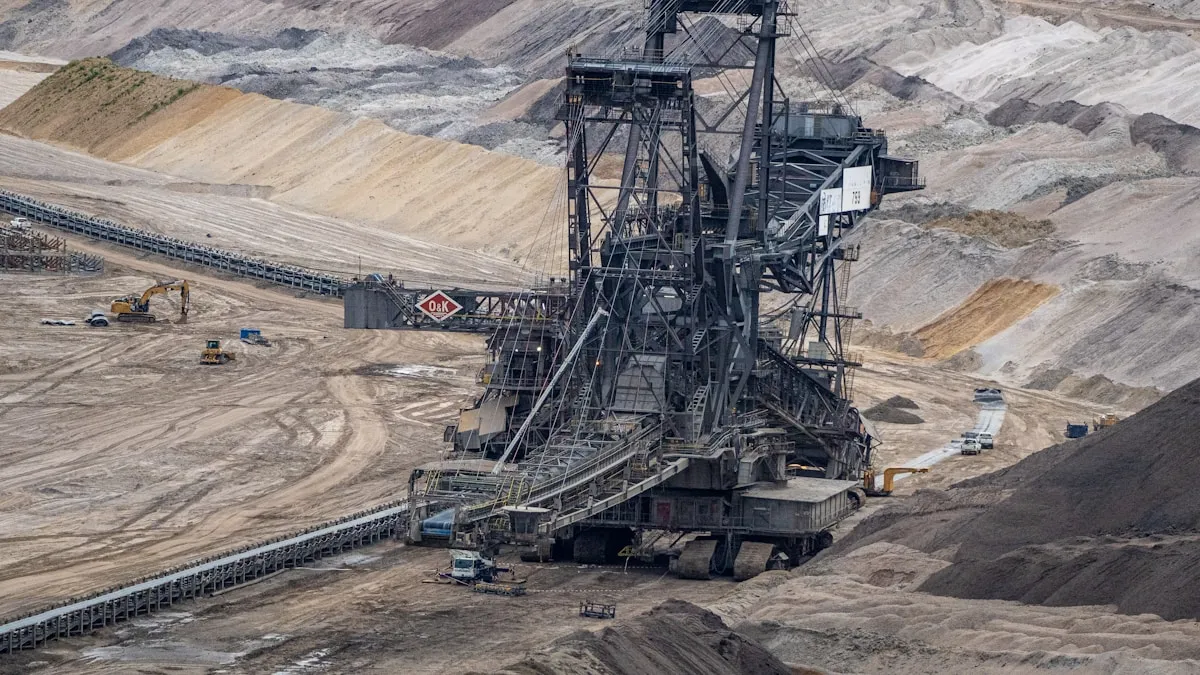
Mine production has plateaued at 3,600 tonnes despite record prices
Global mine production reached an estimated 3,661 tonnes in 2024, marginally surpassing the previous 2018 record of 3,656 tonnes. This represents approximately 70-75% of total annual supply, with recycled gold contributing the balance. The plateau since 2018 has persisted despite gold prices rising from $1,300 to around $4,200/oz by mid-2026, suggesting structural constraints rather than cyclical factors.
China maintains its position as the world’s largest gold producer at 380 tonnes annually, accounting for roughly 10% of global output. Russia follows at 330 tonnes, with production growing 63% since 2010 despite Western sanctions limiting export markets. Australia produces 284 tonnes but saw a 4% decline in 2024, while Canada reached 202 tonnes with the most dramatic growth among top producers (up 98% since 2010). The United States, once a top-three producer, has declined 32% since 2010 to approximately 158-160 tonnes, with depleting reserves at Nevada’s Carlin Trend weighing on output.
Africa has emerged as the world’s top producing region at 1,010 tonnes, led by Ghana at 140 tonnes—now surpassing South Africa. The decline of South African production from 1,000 tonnes at its 1970 peak to under 100 tonnes today illustrates the depletion dynamics facing mature mining regions. Indonesia and Uzbekistan have grown substantially, each producing approximately 130-140 tonnes annually.
| Country | 2024 Production | Change Since 2010 |
|---|---|---|
| China | 380 tonnes | Stable |
| Russia | 330 tonnes | +63% |
| Australia | 284 tonnes | -4% (2024) |
| Canada | 202 tonnes | +98% |
| United States | 160 tonnes | -32% |
| Ghana | 141 tonnes | Growing |
| Mexico | 140 tonnes | +17% (2024) |
| Indonesia | 140 tonnes | +27% (2024) |
| Peru | 137 tonnes | +6% (2024) |
Major mining companies face reserve replacement challenges
Newmont Corporation leads global production at 6.85 million ounces (213 tonnes) in 2024, having expanded through its Newcrest acquisition. The company holds the industry’s largest reserve base at 134 million ounces with a 10+ year mine life at major operations. Barrick Gold follows at 3.91 million ounces (122 tonnes), with reserves of 89 million ounces and notably strong reserve replacement—180% of depleted reserves replaced since 2019.
Agnico Eagle Mines achieved record production of 3.4 million ounces (106 tonnes) in 2024, operating 11 mines across Canada, Australia, Finland, and Mexico. AngloGold Ashanti produced 2.66 million ounces (83 tonnes) and recently acquired Centamin’s Sukari mine in Egypt. Gold Fields rounds out the top five at 2.33-2.43 million ounces (72-76 tonnes).
All-in sustaining costs reached a record $1,456/oz in Q3 2024, up 9% year-over-year. Major cost drivers include royalty payments (which rise with gold prices), labor inflation, energy costs, and sustaining capital expenditure. While record gold prices have expanded margins, cost pressures continue accelerating.
The industry faces systemic reserve depletion challenges. Major gold company reserves shrank 26% from 967 million ounces in 2012 to 713 million ounces by 2017, and average mine life shortened from 19 years to 15-16 years. Companies increasingly rely on mergers and acquisitions rather than organic discovery, with 42% of reserve growth historically coming from M&A.
⚠ Warning
Mining costs hit a record $1,456/oz in Q3 2024 and continue rising. While record gold prices have expanded margins, this cost floor means any significant price correction would rapidly make marginal production uneconomic, constraining supply response.
Recycling provides price-elastic supply of 1,370 tonnes annually
Recycled gold contributed 1,370 tonnes to 2024 supply, up 11% year-over-year and the highest since 2012. This represents approximately 27-28% of total supply, with the share rising to 28.7% in early 2025—a 12-year high. Recycling volumes correlate strongly with gold prices, as higher prices make it economically viable to process lower-grade scrap.
Jewelry recycling accounts for approximately 90% of all recycled gold globally, with electronics, dental, and industrial scrap contributing the balance. Regional recycling patterns vary significantly based on cultural factors, economic conditions, and infrastructure.
East Asia, particularly China, drove the 2024 recycling surge as weak domestic economic conditions prompted retailers to liquidate slow-moving inventory. European recycling markets are well-developed, with Italy serving as a major hub importing scrap from EU neighbors. Notably, Indian consumers showed remarkable resilience to selling, with few reports of distress recycling despite record prices—reflecting gold’s deep cultural significance as long-term family wealth.
The recycling market is valued at approximately $14.7 billion and growing at 9% annually, projected to reach $21 billion by 2028. New technologies are improving recovery rates from electronic waste, where circuit boards contain gold concentrations 10 times higher than natural ore.

Jewelry demand fell 11% in 2024 as prices reached record highs
Global jewelry consumption totaled 1,877 tonnes in 2024, down 11% from 2,111 tonnes in 2023, though the value of purchases rose 9% to $144 billion. Jewelry remains the largest demand category at approximately 38% of total demand, but high prices prompted consumers worldwide to purchase lighter-weight pieces and lower-karat items.
India reclaimed its position as the world’s largest jewelry market at 563 tonnes, down just 2% despite record prices. A significant government policy change—reducing import duties from 15% to 6% in July 2024—revived demand in the second half. Indian consumers strongly prefer 22-karat gold, and purchasing patterns concentrate around wedding seasons (October-November and April-May) and festivals like Akshaya Tritiya. The healthy 2024 monsoon supported rural income and agricultural demand, which remains a key driver.
China’s jewelry demand collapsed 24% to 479 tonnes—the weakest level since 2020 and 26% below the 10-year average. Economic slowdown, declining consumer confidence, and reduced income growth dampened discretionary spending. Structural changes compound these cyclical pressures: declining birth rates and marriage rates are shrinking wedding-related purchases, which fell to just 19% of retailer sales from 24% previously. Chinese consumers prefer 24-karat pure gold, and younger buyers are increasingly favoring gems, jade, and pearls over gold jewelry.
Middle Eastern demand remained relatively resilient, with the UAE maintaining approximately 40 tonnes annually and the region totaling around 285 tonnes. Oil wealth correlation, tax-free shopping in Dubai, and cultural importance for weddings support demand despite elevated prices.
U.S. and European jewelry markets recorded their weakest demand in five years, with the U.S. experiencing 10 consecutive quarterly declines through Q3 2024. High living costs and reduced discretionary income continue pressuring Western markets.
Technology demand grew 7% driven by AI infrastructure
Technology and industrial applications consumed 326 tonnes in 2024, up 7% year-over-year and the strongest annual demand since 2021. Electronics represent the vast majority at 271 tonnes, with AI infrastructure driving significant growth in gold-intensive semiconductor applications.
Gold’s unique properties—superior electrical conductivity, complete corrosion resistance, exceptional malleability, and reliability under extreme conditions—make it indispensable for high-performance electronics despite its cost. AI chips contain up to three times more gold than pre-AI designs, primarily in bonding wire connections. WiFi 7 adoption requires more power amplifiers containing gold, while satellite infrastructure expansion creates emerging demand.
Dental applications continue their structural decline at just 9 tonnes annually, down 5% as ceramic and composite alternatives gain market share. Other industrial uses total approximately 46 tonnes, including decorative plating, gold thread in textiles (particularly Indian saris), and specialized chemical catalysts.
Substitution pressures exist but remain limited after decades of “thrifting” gold content from applications. Gold’s unique combination of properties means many high-reliability applications simply cannot use alternatives. Miniaturization reduces gold per device, but proliferation of devices offsets this trend.
✓ Pro Tip
AI chips contain up to three times more gold than pre-AI semiconductor designs. The explosion in AI infrastructure spending is creating a meaningful new source of industrial gold demand that didn’t exist just a few years ago.
Investment demand reached a four-year high of 1,180 tonnes
Total gold investment including bars, coins, ETFs, and over-the-counter purchases reached 1,180 tonnes in 2024, up 25% year-over-year and the highest since 2020. However, the composition of demand shifted dramatically between Eastern and Western markets.
Bar and coin demand totaled 1,186 tonnes, essentially unchanged from 2023 but worth a record $91 billion in value terms. China led at 336 tonnes (+20%), the highest in over a decade as economic uncertainty and currency concerns drove retail investment. India’s bar and coin demand surged 29% to 239 tonnes, the highest since 2013.
Western markets showed the opposite pattern. U.S. bar and coin demand fell 33% to 78 tonnes, the lowest since 2020. Germany’s demand collapsed 64% to just 17 tonnes, and Switzerland fell 53%. High prices encouraged profit-taking among Western retail investors who had accumulated positions in prior years.
Global ETF holdings ended 2024 at 3,219 tonnes after net outflows of just 7 tonnes—essentially flat. However, the annual average masked dramatic swings: holdings fell to a four-year low of 3,080 tonnes in April before recovering. Asian ETFs added 78 tonnes to reach record holdings of 216 tonnes, while European ETFs saw outflows of 98 tonnes.
SPDR Gold Shares (GLD) remains the world’s largest gold ETF at approximately 860-900 tonnes, worth over $140 billion. iShares Gold Trust (IAU) holds 460-500 tonnes. Chinese ETFs reached record holdings of 115 tonnes and RMB 71 billion in assets, with 2024 marking their strongest year of inflows ever.
Central banks purchased 1,045 tonnes for the third consecutive year above 1,000
Official sector demand totaled 1,045 tonnes in 2024, marking the third consecutive year exceeding 1,000 tonnes—far surpassing the 473-tonne annual average from 2010-2021. Central banks now account for approximately 21-25% of total gold demand, transforming from the supply side (as net sellers of 400-500 tonnes annually before 2010) to a major structural demand driver.
Poland led 2024 purchases at 90 tonnes, bringing total holdings to 448 tonnes representing 17-18% of reserves. Turkey added 75 tonnes despite domestic economic challenges, while India purchased 73 tonnes and repatriated 100 tonnes from UK vaults to domestic storage. China’s reported purchases totaled 44 tonnes, though the People’s Bank of China paused reporting from May-October 2024, and estimated actual purchases exceed reported figures significantly.
The IMF’s International Financial Statistics captured only 34% of estimated official sector demand in 2024, down from 47% in 2023. Sovereign wealth funds rarely publish holdings, and several emerging market central banks appear to be accumulating without disclosure.
The strategic motivations driving central bank accumulation have deepened since Russia’s 2022 sanctions experience. Western nations froze approximately $300 billion of Russian central bank assets, but Russia’s gold reserves (2,336 tonnes) remained accessible. This precedent accelerated de-dollarization efforts, with gold now comprising approximately 27% of global central bank reserves versus the dollar’s 46%. Central banks now hold more gold than U.S. Treasuries for the first time since 1996.
Central bank buying remains price-inelastic—purchases continued despite gold reaching 40 new all-time highs in 2024. This strategic, multi-year approach contrasts sharply with price-sensitive jewelry demand and amplifies gold’s price support during periods when other demand categories weaken.
★ Important
Central banks now hold more gold than US Treasuries for the first time since 1996. This reversal after decades of Treasury dominance signals a fundamental change in how sovereign wealth managers view reserve asset allocation.
Stock-to-flow ratio of 60+ years distinguishes gold from all commodities
Gold’s stock-to-flow ratio of approximately 59-66 years represents the highest of any commodity and defines its monetary characteristics. With 216,265 tonnes above ground and annual production of 3,661 tonnes, existing stock dwarfs new supply. Even if production doubled—an extremely unlikely scenario—total stock would increase by just 3.4% annually.
| Asset | Stock-to-Flow Ratio |
|---|---|
| Gold | 59-66 years |
| Bitcoin (post-2024 halving) | 56-58 years |
| Silver | 22-30 years |
| Platinum | ~1 year |
| Palladium | ~0.4 years |
| Oil | Days to weeks |
This ratio means gold’s price is determined primarily by demand for existing stock rather than by mining supply or production costs. Unlike oil or copper, where supply disruptions quickly create physical shortages, gold’s massive accumulated stock provides a buffer that prevents production changes from significantly affecting price. The implication is profound: willingness of existing holders to sell matters more than new production.
The 2024 supply-demand balance illustrates this dynamic. Total supply reached approximately 4,974 tonnes (mine production 3,661 tonnes plus recycling 1,370 tonnes minus producer de-hedging of 57 tonnes), while total demand including OTC and other flows matched this figure. Central bank buying of 1,045 tonnes essentially offset combined ETF outflows and reduced jewelry demand, demonstrating how different demand categories compensate for each other.
Regional markets show divergent supply-demand dynamics
Asia-Pacific remains a net importer despite significant production. China produces 380 tonnes but consumes over 800 tonnes annually between jewelry, bars, coins, and ETFs. India produces minimal gold domestically but demands over 800 tonnes, relying entirely on imports. Australia exports most of its 284 tonnes of production.
Europe produces limited gold (primarily from Russia and Turkey) but hosts the world’s refining infrastructure. Switzerland processes approximately 50-70% of global gold, with refineries like Valcambi (2,000+ tonnes annual capacity), PAMP, and Argor-Heraeus converting doré and scrap into finished bars. About 80% of Swiss-refined gold flows to Asia and the Middle East.
The Americas are net exporters, led by U.S. (160 tonnes), Canadian (202 tonnes), and Latin American production. Peru, Mexico, and other South American nations contribute significant volumes, while North American consumption (primarily investment demand) remains moderate.
Africa exports the vast majority of its 1,010 tonnes of production, with minimal local consumption. Ghana, Mali, Tanzania, Burkina Faso, and South Africa ship refined gold primarily to Switzerland for processing and onward distribution to consuming markets.
Middle Eastern markets import substantially for jewelry and investment. Dubai serves as a regional hub, with approximately 500 tonnes of gold bullion traded annually through the Gold Souk. The UAE has the world’s second-highest per capita gold demand at 5.07 grams.
Gold’s stock-to-flow ratio of 59-66 years is the highest of any commodity -- meaning existing stock dwarfs new supply so completely that even doubling production would add just 3.4% annually.
Peak gold concerns intensify as discoveries decline sharply
The “peak gold” debate has gained momentum as production plateaus despite record prices. Gold discoveries peaked in 2006, and only five major discoveries (deposits exceeding 2 million ounces) have occurred since 2020, totaling just 17-27 million ounces. The 1990s produced 139 major discoveries; super-giant deposits of 50+ million ounces—common in earlier decades—have not been found since 2000.
Average discovery size has declined from 7.7 million ounces in the 2010s to 4.4 million ounces currently. Discovery costs doubled from $27/oz in 2000-2009 to $62/oz in 2010-2019. The average depth of new discoveries has increased to 66 meters, requiring more expensive underground development rather than surface mining.
Timeline from discovery to production has stretched to 19.5-20 years on average, meaning today’s exploration decline won’t fully impact supply until the mid-2040s. Environmental permitting, community consultation requirements, and regulatory complexity continue extending development timelines, particularly in developed markets where approval can take up to 30 years.
Despite record gold prices, exploration spending fell 15% in 2023 and 7% in 2024. Grassroots exploration’s share dropped from 50% in the mid-1990s to just 19% in 2024, as companies focus on safer brownfield expansions near existing operations. This underinvestment in early-stage exploration threatens long-term supply.
Counter-arguments note that technology improvements continue enabling extraction from lower-grade deposits, and sustained prices above $3,000/oz should eventually incentivize renewed exploration. However, the multi-decade lag between discovery and production means any exploration recovery today won’t affect supply for 15-20 years.
⚠ Warning
The average timeline from discovery to production has stretched to 20 years. Exploration spending has been declining despite record prices. Today’s underinvestment in exploration won’t impact supply until the mid-2040s — but by then, production from existing mines will have declined significantly.
"The fundamental question is whether 1,000+ tonnes of annual central bank demand can be sustained as emerging markets pursue reserve diversification in an increasingly fragmented geopolitical environment."— World Gold Council
Institutional forecasts target $4,400-5,000 for 2026
Major financial institutions have progressively raised gold forecasts throughout 2025 as prices exceeded expectations. Goldman Sachs targets approximately $4,900/oz by end of 2026, citing structural central bank buying averaging 38-70 tonnes monthly and falling interest rates. J.P. Morgan forecasts $5,055/oz average for Q4 2026, expecting central bank and investor demand to average 585 tonnes quarterly in 2026.
Bank of America projects $5,000/oz for 2026, while Morgan Stanley targets $4,400/oz and Deutsche Bank forecasts an average of $4,450 within a $3,950-4,950 range. All institutions emphasize central bank demand sustainability, ETF inflow potential, and geopolitical uncertainty as key drivers.
The World Gold Council’s 2026 outlook presents four scenarios: macro consensus (rangebound, ±5%), shallow economic slip (+5% to +15%), severe “doom loop” downturn (+15% to +30% as safe-haven demand surges), and reflation return (-5% to -20% if growth accelerates and risk appetite returns). The WGC notes that ETF holdings have added approximately 850 tonnes since May 2024—less than half of previous bull cycle inflows—suggesting room for continued institutional buying.
Monitoring framework for investors tracking supply-demand fundamentals
Investors tracking gold supply-demand dynamics should monitor several key data sources. The World Gold Council publishes quarterly Gold Demand Trends reports with detailed tonnage breakdowns by category and region, representing the most comprehensive publicly available dataset.
ETF holdings offer daily visibility into investment demand trends, with GLD and major funds publishing holdings data. COMEX warehouse stocks and LBMA vault holdings indicate physical market tightness, with recent stress episodes (early 2025 saw inventories surge 153% as gold moved from London to New York) providing price signals.
Shanghai Gold Exchange premiums or discounts to London prices reveal Chinese demand strength, while physical premiums in regional markets (Dubai, Mumbai) indicate local supply-demand conditions. Indian jewelry demand peaks during wedding seasons (October-November, April-May) and festivals like Akshaya Tritiya create predictable seasonal patterns.
Central bank purchase data remains challenging to track given unreported buying, but IMF statistics, sovereign wealth fund disclosures, and analyst estimates from Metals Focus and GFMS provide approximations. Mining company quarterly production reports and reserve statements offer supply-side visibility.
Only five major deposits (2M+ oz) have been found since 2020, compared to 139 major discoveries in the 1990s. Super-giant deposits of 50M+ oz have not been found since 2000.
Structural shifts favor price-inelastic demand over supply growth
The fundamental picture for gold has shifted structurally since 2010. Central banks—historically net sellers suppressing prices—have become the largest marginal buyers, adding over 1,000 tonnes annually regardless of price levels. This price-inelastic strategic demand provides a floor that price-sensitive jewelry buyers and volatile ETF flows lack.
Supply growth faces persistent constraints. Mine production has plateaued for seven years despite prices more than doubling. Exploration underinvestment, declining ore grades, and extended development timelines suggest production growth of 1-2% annually at best. The high stock-to-flow ratio means even significant production changes barely move the needle against 216,000 tonnes of existing stock.
The balance between constrained supply and diversified demand—spanning jewelry’s cultural significance in emerging markets, technology’s irreplaceable applications, investment’s safe-haven role, and central banks’ strategic accumulation—supports gold’s continued price appreciation. Record prices in 2024-2025 validate this thesis, with central bank buying sustaining prices even as traditional Western investment demand weakened. The fundamental question going forward is whether 1,000+ tonnes of annual central bank demand can be sustained as emerging markets pursue reserve diversification and de-dollarization strategies in an increasingly fragmented geopolitical environment.