Pure gold is remarkable. But for many applications — from jewelry to circulating coins to dental work — pure 24K gold is actually too soft, too expensive, or too bright a yellow. Alloying gold with other metals allows precise control of hardness, color, melting point, and cost.
Understanding gold alloys helps you make better purchase decisions, understand why products look and behave differently, and know what you’re actually buying.
Why Alloying Gold?
The Softness Problem
Gold’s Mohs hardness is approximately 2.5 — similar to a fingernail. For comparison:
- Fingernail: 2.5
- Gold (24K): 2.5
- Copper: 3.0
- Sterling silver: 2.5-3.0
- 18K yellow gold: 3.5-4.0
- 14K yellow gold: 4.0-5.0
- Hardened steel: 6.0+
A pure gold ring will scratch deeply from brief contact with a hard surface. A pure gold coin rubbed against a hard object will lose material rapidly. Even gentle daily use wears pure gold visibly over years.
ℹ Note
The Mohs scale measures scratch resistance, not overall toughness. Gold scores just 2.5 — softer than a copper penny — which is why virtually all gold used in jewelry or coinage is alloyed with harder metals.
Alloying substantially increases hardness. The intermetallic interactions between gold and alloying elements create a harder crystalline structure. 18K gold is roughly 40% harder than 24K; 14K gold is roughly 70-80% harder.
Color Control
Pure gold’s warm yellow color is beautiful, but it’s not the only aesthetic option. Alloying allows white, rose/pink, green, and even blue-ish gold. The jewelry market demands color variety; alloying provides it.
Cost Management
Replacing some gold content with less expensive metals reduces material cost. A 14K gold ring uses only 58.3% gold — the remaining 41.7% is typically copper, silver, and zinc, which are dramatically cheaper.
This is why 14K is the most common jewelry gold in the United States — it balances durability, appearance, and cost.
✓ Pro Tip
When buying gold jewelry as a store of value, remember that only the gold content matters for melt value. A 14K piece is 58.3% gold by weight — the rest is base metal with minimal resale value.
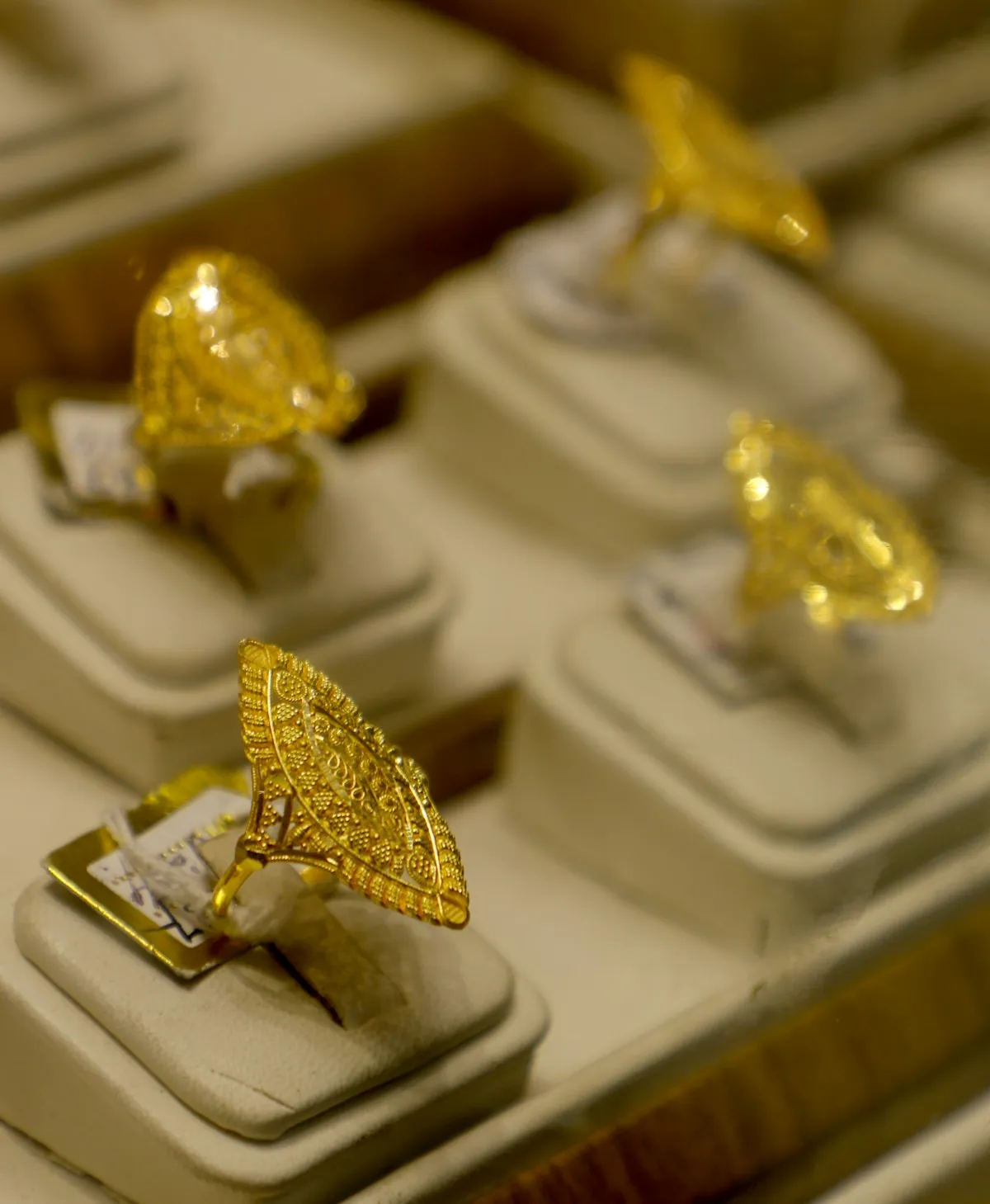
Yellow Gold Alloys
The classic gold color, dominated by gold’s natural warm yellow. Traditional yellow gold alloys use a three-metal system:
Standard yellow gold alloy components:
- Gold (Au) — the base, providing color and value
- Silver (Ag) — added to lighten the yellow (less silver = warmer/oranger)
- Copper (Cu) — added to increase hardness and deepen/warm the yellow
22K Yellow Gold (91.67% Au)
Used for: American Gold Eagle coins, South African Krugerrand coins, traditional jewelry in Asia and Middle East
Typical composition: 91.67% gold + 3% silver + 5.33% copper (Eagle) or similar
Properties: Hard enough for circulating coins and jewelry; retains strong yellow color; considered a premium jewelry standard in many cultures
Investment context: The American Gold Eagle contains exactly 1 troy oz of gold; the silver and copper are added to the coin, not substituted for gold. You still get 1 oz of gold content.
18K Yellow Gold (75.0% Au)
Used for: High-quality jewelry, Swiss watch cases, fine jewelry worldwide
Typical composition: 75% gold + 12.5% silver + 12.5% copper
Properties: Good balance of gold content, durability, and working properties; distinctly yellow but slightly harder than higher-karat alloys
Why 18K is prized: Considered the “minimum” for quality jewelry in many European countries; still has substantial gold content while being significantly more durable than 24K
14K Yellow Gold (58.3% Au)
Used for: Most American jewelry, everyday wear pieces
Typical composition: 58.3% gold + ~16% silver + ~25% copper
Properties: Significantly harder than 18K; more durable for everyday wear; less saturated yellow color (paler than 18K or 22K)
Trade-off: More durable and more affordable, but lower gold content
9K Yellow Gold (37.5% Au)
Used for: Economy jewelry in UK, Australia, Ireland
Typical composition: 37.5% gold + rest silver and copper
Properties: Hard, durable, most affordable; noticeably paler yellow than higher-karat alloys
White Gold Alloys
White gold is a marketing term for gold alloys that appear silver-white. Pure gold is yellow; white gold alloys are achieved by incorporating white metals.
White Gold Alloy Systems
Gold-Palladium White Gold (most common today):
- Composition: 75% gold + 25% palladium (18K) or 58.3% gold + palladium (14K)
- Color: Pale yellow-gray in the alloy; requires rhodium plating for bright white appearance
- Properties: Hypoallergenic (no nickel); very hard; naturally resistant to tarnish; rhodium plating less critical than nickel alloys
- Palladium is expensive, making this alloy pricier than yellow gold equivalents
Gold-Nickel White Gold (historical, still used):
- Composition: 75% gold + up to 25% nickel/copper/zinc
- Color: Pale yellowish; requires rhodium plating
- Properties: Hard; lower cost than palladium alloys; nickel can cause allergic reactions in ~15% of the population
- EU restrictions on nickel content have pushed industry toward palladium alloys
- Still common in the US where nickel restrictions are less strict
The Rhodium Plating Issue
White gold alloys are not naturally bright white. The alloy itself is typically:
- Gold-palladium: pale yellow-gray
- Gold-nickel: pale yellow to grayish
To achieve the crisp, bright white appearance consumers expect, white gold jewelry is rhodium plated — electroplated with a thin layer of rhodium (a platinum group metal that is bright white and very hard).
Rhodium plating wears over time. Under the yellow-tinted alloy beneath, white gold jewelry can develop warm patches as the rhodium thins. Most jewelers recommend re-plating every 12-18 months for rings (due to friction) or when the yellow undertone appears. This adds maintenance cost to white gold jewelry.
Implications for buyers: White gold is not a zero-maintenance equivalent to platinum. Factor in occasional re-plating cost (~$40-80 per ring) if choosing white gold over yellow gold or platinum.
⚠ Warning
Nickel-based white gold alloys can trigger allergic reactions in approximately 15% of wearers. If you have sensitive skin, insist on palladium-based white gold or choose yellow gold or platinum instead.

Rose/Red/Pink Gold Alloys
Rose gold’s warm pinkish hue has surged in popularity since the 2010s. The color comes from high copper content.
Rose Gold Alloys
18K Rose Gold: 75% gold + 22.25% copper + 2.75% silver 14K Rose Gold: 58.3% gold + 33-40% copper + trace silver Red Gold (deep rose): Higher copper content still; darker, more saturated pink
The pink-to-red spectrum: More copper = deeper pink/red. Less copper = lighter rose. Adjusting silver content also affects tone — more silver lightens the color.
Properties of rose gold:
- Copper increases hardness significantly — rose gold is often harder than equivalent yellow gold
- No rhodium plating needed — the color is intrinsic to the alloy
- The pinkish color actually deepens slightly with age as copper develops a microscopic patina on the surface
- No nickel means generally hypoallergenic (copper can rarely cause reactions in very sensitive individuals)
- Less expensive than white gold (no palladium) or platinum
Note: “Russian gold” in the 19th century referred to high-copper rose gold — what we’d call red gold today. The term fell from use.
Green/Greenish Gold (Electrum)
When gold is alloyed primarily with silver, the resulting alloy is lighter and greenish-yellow. Electrum — the natural silver-gold alloy found in deposits — appears pale yellow to greenish.
Modern green gold: 75% gold + 25% silver (18K equivalent) produces a distinct greenish-yellow hue used in some artistic jewelry. Adding cadmium also creates green gold but is rare due to cadmium’s toxicity.
Historical significance: Electrum was among humanity’s first coinage materials. Lydian coins (~600 BCE) were struck in electrum. The variable silver content made standardization difficult — one reason pure gold eventually replaced electrum for coinage.
White gold’s bright white appearance comes from rhodium plating, not the alloy itself. The plating wears over time and must be reapplied every 12-18 months at a cost of $40-80 per ring.
Alloys in Investment Gold
Why American Gold Eagles Are 22K
The American Gold Eagle was designed in 22K alloy deliberately:
- Durability: Coins change hands many times. Pure gold wears; 22K resists wear
- Strike quality: The harder alloy produces sharper coin detail
- Tradition: Follows the tradition of pre-1933 US gold coins (Double Eagles were 90% gold)
Key point: A 1 oz American Gold Eagle contains exactly 1 troy ounce of gold. The total coin weighs 1.0909 troy oz — the extra 0.0909 oz is the silver and copper alloy. You’re not getting less gold; you’re getting the same gold plus added alloy metals for durability.
★ Important
Do not confuse karat purity with gold content. A 22K American Gold Eagle and a 24K Canadian Maple Leaf both contain exactly 1 troy ounce of pure gold. The Eagle simply weighs more because it includes additional alloy metals.
Why Maple Leafs Are 24K
The Canadian Gold Maple Leaf went to .9999 fine to differentiate it from the Krugerrand and Eagle. 24K pure coins:
- Maximum gold content per ounce of total weight
- Appeal to investors who want maximum purity
- Require more careful handling (softer; more prone to contact marks)
The trade-off: A Maple Leaf dropped on a hard floor or stored touching other coins will develop surface contact marks more easily than a harder Eagle or Krugerrand.
A 22K American Gold Eagle weighs 1.0909 troy oz total but contains exactly 1 oz of gold. The extra 0.0909 oz is copper and silver alloy added for durability -- you are not getting less gold.
Dental and Medical Gold Alloys
Gold alloys in dentistry and medicine have specific requirements:
Type III dental gold (crown alloys):
- Approximately 75-78% gold + palladium, platinum, silver, copper
- Harder than jewelry alloys; must withstand biting forces
- Gold in dental applications has excellent biocompatibility — doesn’t corrode in saliva, doesn’t react with tissue
Biomedical applications:
- Pacemaker electrodes: high-purity gold for corrosion resistance in body fluids
- Surgical instruments: gold alloy tips for precision work
- Injectable gold compounds: used in rheumatoid arthritis treatment (chrysotherapy) since the 1920s
Key Takeaways for Investors
Higher karat ≠ always better investment:
- Investment bars are typically .999 or .9999 (24K) — maximum gold content is optimal
- Investment coins vary: Maple Leafs at .9999, Eagles at .9167 (22K), both are excellent choices
- The 22K alloy in Eagles doesn’t make them “less gold” — they contain exactly 1 oz gold
Jewelry gold value = gold content × spot price:
- An 18K necklace weighing 10 grams contains 7.5 grams of gold (75% × 10g)
- Dealers pay for the gold content, not the total weight
White gold is not platinum:
- White gold requires maintenance (re-plating) that yellow gold does not
- Platinum, while more expensive, requires no plating and is more durable